Money conversations can feel like the least romantic part of wedding planning, yet your wedding budget quietly impacts almost every decision you’ll make. How big should the guest list be? Can you afford that dream venue? Is a live band realistic, or will a DJ make more sense? It all connects back to your budget. If you’re wondering what actually goes into a wedding budget, how much to spend on each category, or how to talk about it all without tension, you’re not alone. Let’s walk through what a wedding budget really is, how to build one that fits your life, and how to talk about it with your partner and families in a way that feels calm, clear, and kind.
What Is a Wedding Budget, Really?
A wedding budget is more than just a big number you hope to stay under. Think of it as a thoughtful plan for where your money will go so that your wedding reflects your priorities, not just your receipts.
At its core, your wedding budget is:
- The total amount you’re willing and able to spend on your wedding
- A breakdown of that total into specific categories (venue, catering, attire, photography, etc.)
- A living document that you update as quotes come in and decisions are made
A healthy wedding budget is realistic, flexible, and personal. It considers what you earn, what you’ve saved, whether anyone else is contributing, and what kind of celebration feels right for you. It’s not about copying what your friends spent or what the internet says an “average” wedding costs. It’s about what fits your life, your values, and your comfort level.
Most importantly, a wedding budget is not a verdict on how much your love is worth. A small, simple wedding can be just as meaningful and magical as a lavish one. Your budget is simply a tool to make sure the day you’re planning supports your long-term life together, rather than creating stress long after the last sparkler has burned out.
What is Included in a Wedding Budget?
When couples start thinking about their wedding budget, they often underestimate just how many pieces are involved. Listing everything out can bring a lot of clarity and prevent those “oh no, we forgot about that” surprises.
Here are the main categories that typically fall under a wedding budget:
- Venue and ceremony site fees
- Catering and bar (food, drinks, service fees, gratuity)
- Photography and videography
- Attire and beauty (wedding dress, suits, alterations, hair, makeup, accessories)
- Decor and florals (bouquets, centerpieces, ceremony decor, rentals, candles, linens)
- Entertainment (DJ or band, ceremony musicians, audio equipment)
- Stationery (save-the-dates, invitations, postage, day-of signage, programs, place cards)
- Officiant fees
- Rentals (tables, chairs, linens, dishware, glassware, arches, decor pieces)
- Transportation (shuttles, limos, rideshare support)
- Cake or desserts
- Favors, welcome bags, or small guest gifts (This could also include gifts for parents and wedding party)
- Marriage license and permits
- Tips and gratuities
- Wedding Planner or Coordinator
Depending on your vision, you may also have line items for things like hotel room blocks, a rehearsal dinner, post-wedding brunch, or special experiences (like a private vow reading or a unique send-off).
Seeing all of these categories laid out can feel a bit overwhelming, but it’s actually empowering. From here, you get to decide what matters most. Maybe photography and great food are at the top of your list, so you’re willing to keep decor simple. Or perhaps you dream of an epic dance party and want to invest more in entertainment. Your wedding budget is where those priorities start to take shape.
How Much do I Spend on Each Category?
There’s no one perfect formula for dividing your wedding budget, because every couple’s values and circumstances are different. However, having some guidelines can be a helpful starting point as you begin to allocate your funds.
A common starting framework might look like this:
- Venue, catering, and bar: Often the largest portion, frequently 40–50% of your total budget
- Photography and videography: Around 10–15%
- Attire and beauty: Around 5–10%
- Florals and decor: Around 8–12%
- Entertainment: Around 5–10%
- Stationery: Around 3–5%
- Planner or coordinator: Around 8–12% (depending on the level of service)
- Miscellaneous, tips, and cushion: Around 5–10%
These percentages are just a guideline, not a rulebook. In Minnesota, for example, venue and catering costs can vary widely between urban and rural locations, and between peak and off-peak seasons. Working with a planner who knows local pricing can help you tailor these numbers to your specific situation.
As you research, you’ll quickly see how real quotes line up with your initial estimates. This is where your wedding budget becomes a living document. You may decide to:
- Increase your total budget (if it’s comfortable and realistic)
- Reallocate funds from one category to another based on quotes
- Adjust your vision slightly to align with what feels financially wise
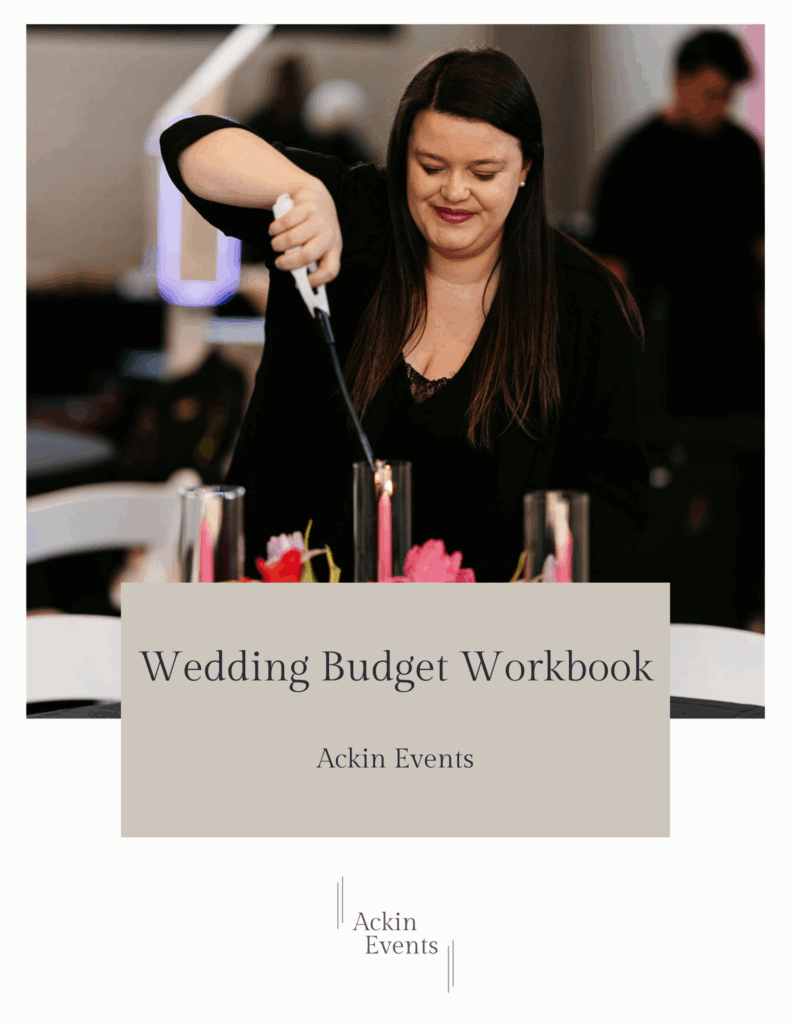
What matters most is that every adjustment is intentional. Each dollar you shift is supporting something that actually matters to you, instead of disappearing without a plan. Check out our Free Wedding Budget Workbook for help getting started!
How do I Set my Wedding Budget?
Before you can divide your wedding budget into categories, you need to land on that big-picture number. This can feel intimidating, but breaking it down step-by-step makes it much more approachable.
Start by looking at three key pieces:
- Savings: How much do you already have set aside that you’re comfortable using for the wedding?
- Income: Is there a reasonable amount you can save each month between now and the wedding date without creating financial strain? Multiply that by the number of months until the wedding.
- Outside contributions: Are parents or other family members planning to contribute? If so, is that a fixed amount or are they covering specific elements (like the rehearsal dinner or your dress)?
Add those numbers together, and you’ll have a working total for your wedding budget. From there:
- Consider your future goals. Do you want to buy a home soon? Are there student loans or other priorities you need to keep in mind? Your wedding budget should honor those long-term dreams.
- Build in a buffer. It’s wise to reserve around 5–10% of your total budget for unexpected expenses. Quotes change, needs shift, and having that cushion protects you from last-minute stress.
- Revisit as needed. As you get real quotes from vendors, you may realize your initial number needs a small adjustment. That’s normal. What matters is that any change is discussed and agreed upon together.
Remember, a “perfect” number doesn’t exist. The right wedding budget is the one that supports the celebration you want, while still letting you feel secure and excited about your financial future as a married couple.
Best Tips for Discussing your Wedding Budget with your Spouse
The heart of your wedding budget is not math—it’s communication. This is one of the first big financial conversations many couples have, and how you handle it can set the tone for future money talks in your marriage.
Here are some gentle, practical ways to make the conversation easier:
Begin with your vision, not the numbers.
Before you talk dollars, talk dreams. What does each of you imagine when you picture your wedding day? Is it intimate or large? Indoor or outdoor? Casual or formal? Center your shared values first—connection, family, fun, faith, tradition, or creativity. Once you know what you both care about, it’s much easier to decide where to invest.
Be transparent about comfort levels.
Each of you may come into this with different experiences around money. Be honest about what feels comfortable and what feels stressful. One of you may be okay spending more, while the other is more cautious. Naming those feelings allows you to find a middle ground that honors both of you.
Create a safe, judgement-free space.
Agree that this is a no-blame conversation. No shaming about past financial decisions, no pressure to match someone else’s wedding, no criticism if one of you has a different perspective. You’re on the same team, working toward the same goal.
Assign roles and responsibilities.
Some couples love spreadsheets; others would rather not get into the weeds. Decide together who will track expenses, contact vendors, or maintain the budget document. You can both have input, even if one of you is more “hands-on” with the details.
Revisit Regularly.
Schedule check-ins—maybe once a month or after each major booking. This keeps you both in the loop and gives you a chance to course-correct early if needed, rather than feeling surprised later.
Approaching your wedding budget this way turns “the budget talk” into a meaningful step in building your life together, rather than a source of tension.
Best Tips for Discussing your Wedding Budget with your Family
Family contributions can be a beautiful gift—and sometimes a complicated one. Expectations, traditions, and communication styles all come into play. With a little care, you can keep those conversations loving and respectful.
Start with gratitude and clarity.
If family members are contributing, begin by genuinely thanking them. Then ask gentle, clear questions: Are they offering a specific dollar amount, or are they planning to cover particular pieces (like catering, attire, or the rehearsal dinner)? Clarifying this early helps avoid misunderstandings later.
Have the couple align first.
Before talking to your families, make sure you and your partner are on the same page about your overall wedding budget, guest count, and priorities. Presenting a unified, calm plan makes the conversation smoother and signals that you’re making decisions together.
Respect their boundaries – and your own.
Parents may have particular hopes, such as inviting certain relatives or incorporating traditions. If they are contributing financially, they may feel more invested in decisions. Listen to their perspective with respect, and then gently share your own. It’s okay to lovingly say, “We really appreciate your help, and we also want the day to feel like us.”
Be specific about expectations.
If a family member offers to pay, ask: Is this amount flexible or firm? When will the funds be available (now, closer to the date, paid directly to a vendor)? Clear details protect both you and them from awkward situations later on.
Keep communication open.
Once you’ve had the initial budget talk, stay in touch with any family members who are contributing. Share updates, ask for input on areas that matter to them, and let them know how much their support is helping create a meaningful celebration.
Approaching these conversations with kindness, clarity, and gratitude allows your wedding budget to become a shared effort instead of a shared stress.
Your wedding budget does not have to be a source of anxiety. When you understand what goes into it, set it based on your real life, and talk openly with the people involved, it becomes a powerful tool for creating a day that truly reflects you. From the first conversation with your partner to the thoughtful talks with family, every step is an opportunity to practice the kind of communication and teamwork that will serve your marriage long after the last dance.
At Ackin Events, we walk couples through this entire process—from clarifying priorities and estimating realistic costs in Minnesota, to adjusting the plan as your vision becomes clearer. With the right support, your wedding budget can feel less like a constraint and more like a roadmap to a joyful, authentic celebration you’ll remember for all the right reasons. Contact us to learn more about how we can help you build the perfect wedding budget!